OrangeTractorTalksEverything Kubota2020-05-28T15:01:32Zhttps://www.orangetractortalks.com/feed/atom/WordPressMr. Khttp://www.orangetractortalks.com<![CDATA[You’ve Found the #1 Kubota Forum Online]]>http://www.orangetractortalks.com/?p=32952020-05-28T15:01:32Z2020-05-25T00:56:40Z
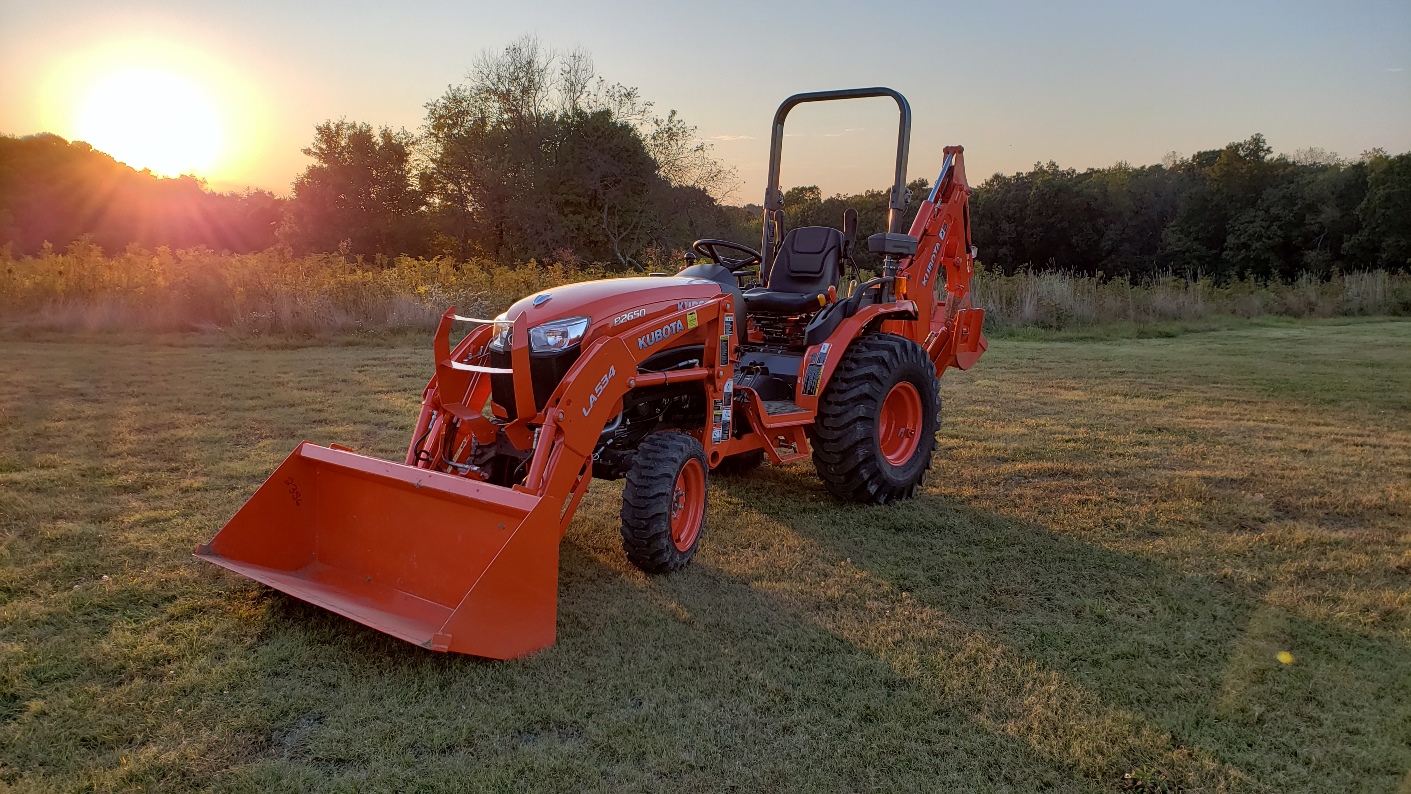
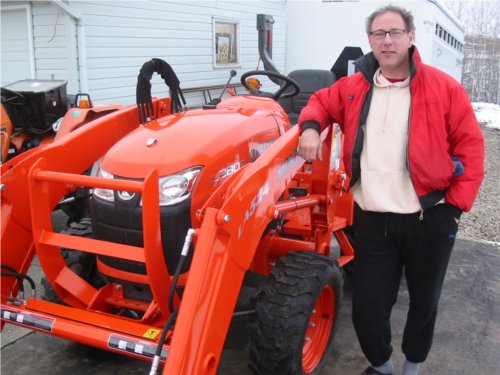
A Kubota B2650 by the sunset, posted by forum member PA452.
Our Kubota Forums Visited by Thousands Daily
Need help fixing your Kubota or locating a part? Not sure what that strange lever does? Maybe you are not yet a Kubota owner and need some buying advice? If you are asking yourself any of these questions you’ll want to check out our forums, where you can post and meet thousands of other Kubota equipment owners (or soon-to-be owners).
Our forums are so popular that we think they are the number one source on the internet for Kubota equipment owners to gather, swap stories and learn from one another. If you own a Kubota, sooner or later, you’ll visit the forums on OrangeTractorTalks.
Kubota Forums Guide
Service, Repair & Maintenance – One stop for all of your service advice, repair or maintenance tips. Search this forum for answers to common Kubota repair procedures.
Tractor Operating – A good place to learn how to operate your Kubota tractor, both to maximize the investment in your equipment but also safely. Good place to start if you are new are new Kubota owner.
Implements & Attachments – Tips, tricks and advice for operating, maintaining and buying implements like loaders, mowers, blades, tillers or hitches.
Buying Advice, Recommendations & Pricing – Not a Kubota equipment owner yet but might be soon or not sure what to look for when buying? Stop in here to get advice from experienced owners on what to watch for when buying.
Grey Market & Zennoh – Heard that your Kubota might be a grey market tractor or maybe it’s Zennoh branded? Do not panic! This forum is for owners of grey market tractors looking to service, maintain and source parts.
Fabrication & Customization – Have some custom improvements to your tractor, your truck or anything else you want to show off? Post here (or lurk other projects to get inspired).
Tires & Wheels – Discuss everything related to ag, turf or industrial tires here, plus advice on how to hookup chains or what to use for ballast.
Projects – Post details of your project around the shop, the house or the acreage here. Show us the steps and the finished result!
Buy, Sell & Trade – Your starting point for buying or selling Kubota tractors and implements.
How to Get Started
If you just want to read and not post questions or content of your own, you are already set! Just visit the forum of your choosing and browse from there or search a few keywords to narrow it down. If you want to post a question or share a picture or two, you will need to register first by choosing a username and entering your email address. Happy browsing and welcome to the internet’s largest forum of Kubota equipment owners and enthusiasts!
Show Me More Pictures of That Clean B2650
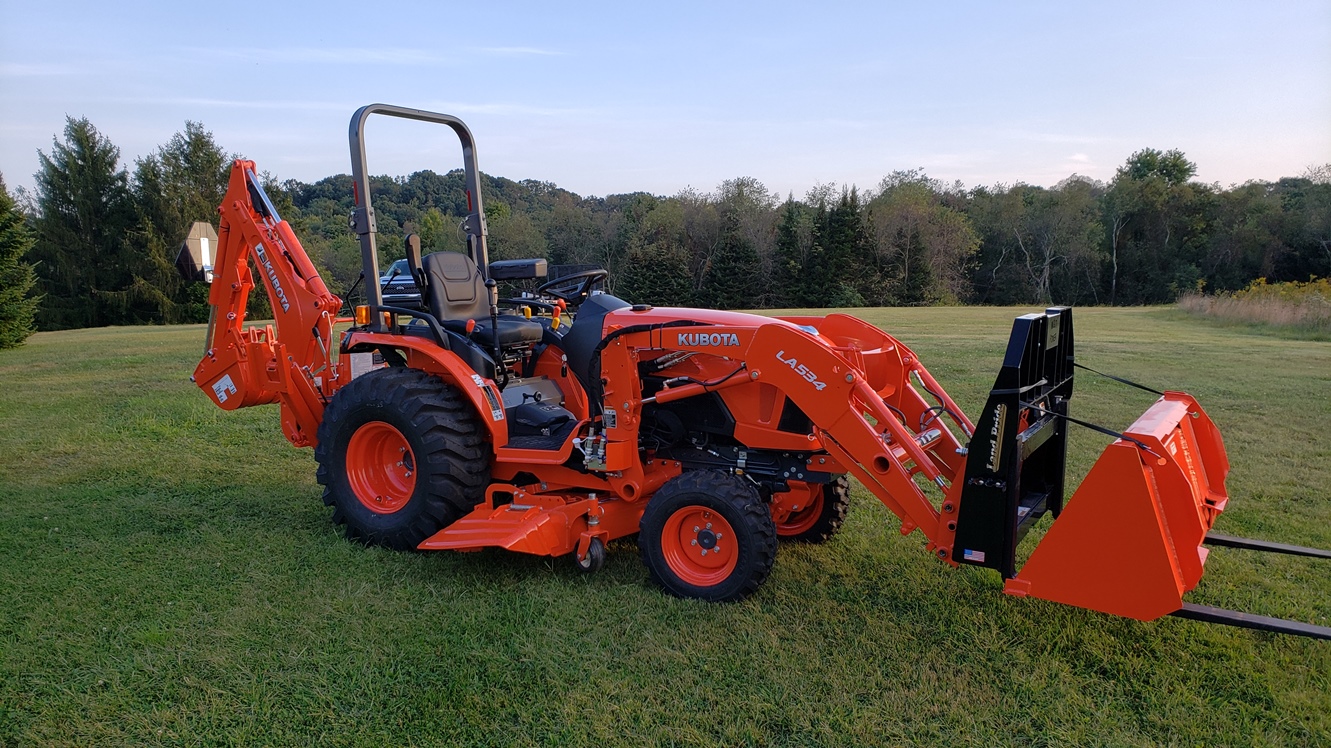
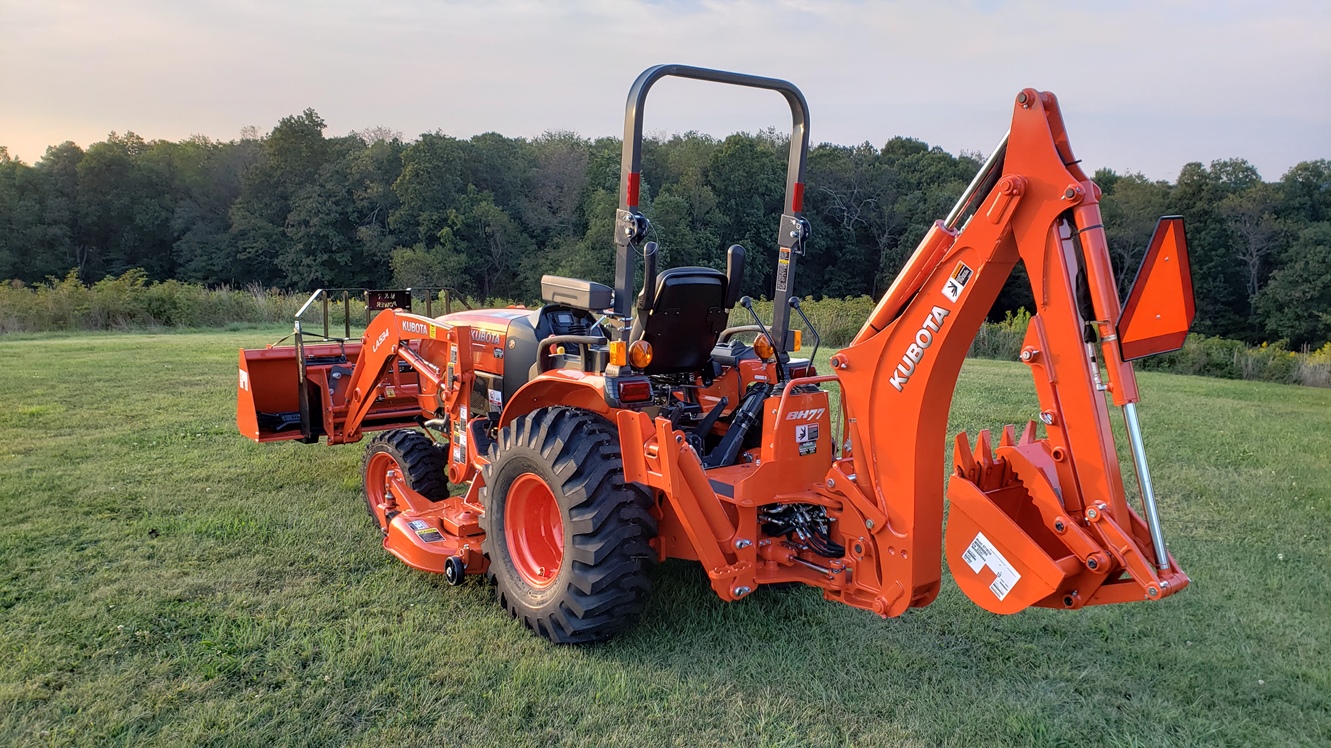
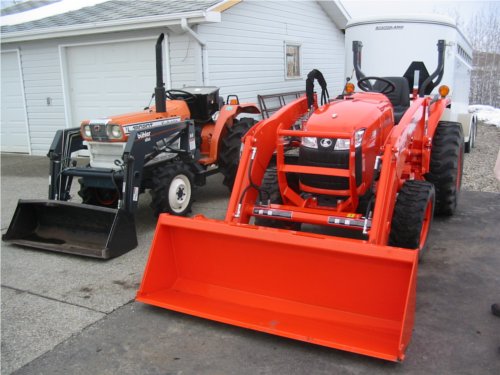
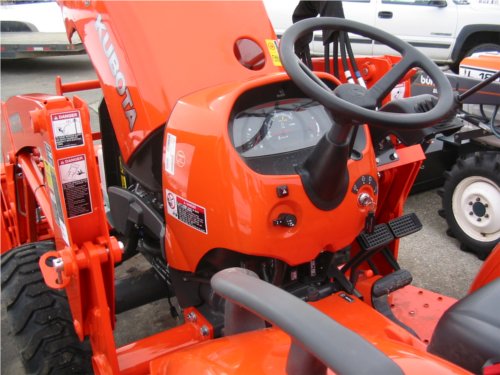
Here are a few more pictures of that clean-looking B2650 by the sunset from the top of the article. If you want to see the whole delivery journey, check out PA452’s post on the forums.
]]>Mr. Khttp://www.orangetractortalks.com<![CDATA[Kubota’s Online Illustrated Parts Catalog]]>http://www.orangetractortalks.com/?p=29912019-08-10T17:34:44Z2012-09-26T05:33:44Z
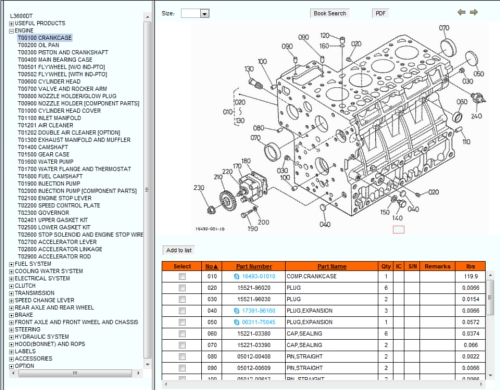
Exploded view diagram of a crankcase from a Kubota L3600.
Tools, Knowledge and Part Numbers
As a proud and perhaps frugal Kubota equipment owner, you have decided to take some of the servicing, repair and maintenance of your orange equipment onto your own shoulders. The right tools, some like minded friends and correct part numbers go along way. The tools you can beg, borrow or steal. The advice – that too is freely available if you pop into our forums and ask around. The tricky bit is figuring out those part numbers.
Part numbers for consumables like filters, fluids or clutches are easy to discover but what if you need to rebuild the entire steering box? What if you are not exactly sure what the broken pieces in your hand are but you know you need a new one? This is where a good parts manual comes in.
More Than Part Numbers
Parts manuals are actually not only just for sourcing part numbers. We use them to help diagnose and plan our dis-assembly and reassembly because they feature exploded-view diagrams, essentially giving us “x-ray vision”. They provide peace of mind knowing that the part we have in our hand is the same one on the diagram. We waste less time returning incorrectly ordered parts and save money by not paying restocking fees. Anyone serious about maintaining or servicing their Kubota equipment has a parts manual at hand.
Where to Find a Parts Manual?
Up until now you could either purchase a printed parts manual from your local dealership or try to find a . The trouble with both of these approaches is:
you have to wait for your manual to arrive so you might be blocked for a few days or weeks
they are not automatically updated with superseded part numbers and
you have to pay for them
Kubota’s Online Parts Catalog
For a little while now Kubota has made available on their website a comprehensive illustrated parts list (US) (or click here for the Canadian version). This is essentially an online portal view into Kubota’s EPC (electronic parts catalog) which dealers also use for their parts lookup requirements. The catalog is easy to use, covers models as far back as the Nixon Administration and is free. Gray market models are excluded but that is business as usual for Kubota in North America.
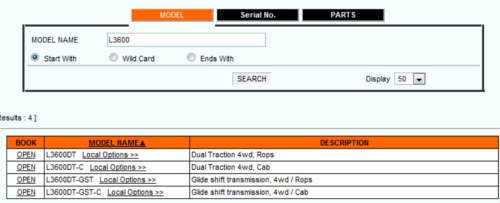
Searching for L3600 returns results for models with and without ROPS and GST (glide shift) transmissions.
Other Handy Features
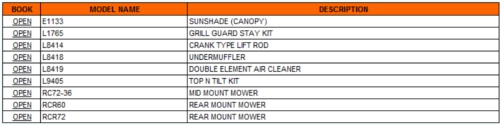
One feature we like is the ability to see related parts manuals for any given model. Simply click the “Local Options” link to the right of your model in the search results. When we tried this for an L3600DT we see manuals for the optional grill guard, mid-mount mower and rear mount mower to name a few. This is helpful feature because it lists the model numbers of those optional pieces of equipment as well.
Related and optional equipment for an L3600DT.
Another nice feature is the ability to 1-click PDF any of the pages you see online. Print off just the sections you need and bring them over to the workbench. No need to worry about getting dirty fingerprints on them.
It’s About Time…
Although we are very impressed that Kubota is now offering an online parts catalog, something of this nature was long overdue. John Deere has hosted its own online parts catalog for many years now and we had always wondered when Kubota would also begin to leave printed material behind. Keep this up!
Mr. K
After this article was written, Will from Avenue Machinery in Abbotsford BC Canada contacted me. He was reminding me that Kubota Canada and Kubota USA are two different organizations and as such sometimes the parts between the two are different. If you live in Canada you should be referring to Kubota Canada’s online parts catalog instead. Thanks for keeping us honest Will!
]]>Mr. Khttp://www.orangetractortalks.com<![CDATA[An Overview of Kubota’s L3800]]>http://www.orangetractortalks.com/?p=29362019-08-10T17:34:44Z2011-04-22T20:10:09Z
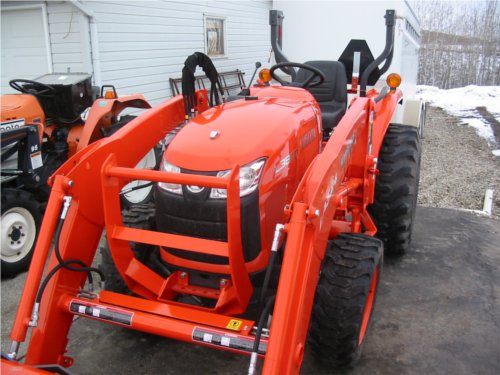
Kubota's new L3800, 4WD HST, R4 industrial tires, LA524 loader and foldable ROPS.
The new L3800, which was officially announced December of 2010 along side its brother model the L3200, is Kubota’s attempt at introducing some premium features to the standard L-Series lineup. Features like an upgraded electronic dash panel, cruise control, power steering, suspension seat, a refresh of operator controls, larger fuel tank as well as body and hood panel styling more consistent with the Grand L40 Series.
Deen Implement a Kubota dealer based in Forney Texas has posted a very comprehensive video highlighting some of the L3800s newest features.
OrangeTractorTalks recently had a chance to interview the owner of a new L3800. Skip to the interview or continue reading for an overview of the L3200 and L3800.
Model Lineup
Up until now, the standard L Series models consisted of the L2800, L3400 and L4400, all of which represent very good value for the money in a fairly simple and straightforward package – ie. no air conditioning, radios or massaging seats. Owners of these “standard” L Series models, that are comfortable with the horsepower requirements offered in the range, are getting all of what they want and not paying for luxuries that Kubota does make available in its Grand L40 offerings.
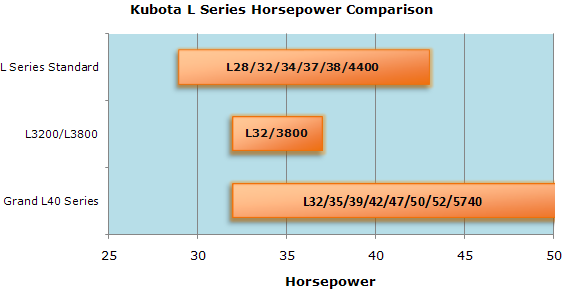
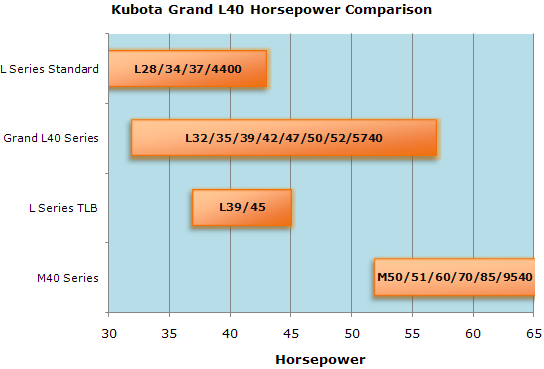
Horsepower Comparison
Horsepower for the lineup ranges from 30 hp for the L2800 through 45 hp for the L4400. The L3200 and L3800 are rated at 32 hp and 37 hp respectively so these models occupy the middle of the horsepower range offered by the lineup. Power for the L3800 is supplied by a 1.8L, high efficiently, low emission 3 cylinder water cooled diesel engine.
Stepping up in power from the L3800 means considering the larger L4400 or the L3940 Grand L40. TractorByNet has an interesting discussion concerning L3800 vs. L3940 that is worth reading for anyone considering adding an L3800 to their garage.
Transmissions
As with the other standard L Series models, the L3800 is available in 2WD and 4WD configurations with an 8 forward, 4 reverse gear transmission standard and 3 range HST optional. HST models are available in 4WD only.
A quick word about the HST – if you have never driven an HST Kubota before, be sure to try on the lot it before ruling it out. Kubota’s HSTs are best of their kind and really help to reduce operator fatigue. Yes there is additional cost (in terms of both money and horsepower rating) but we feel this option is worth taking. A HST equipped 4WD Kubota with a set of R4 industrial tires is our favorite combination.
Implements and Attachments
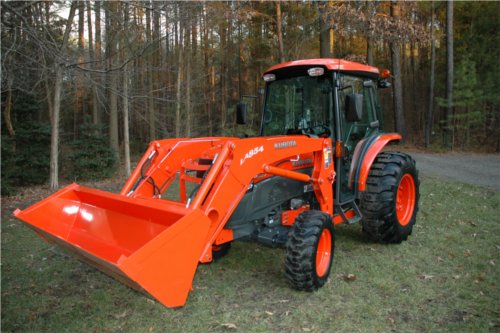
Kubota introduces a new 60″ LA524 loader specifically for the L3200 and L3800 which comes with a front grille guard standard – handy for when you would rather not have that boulder in the loader roll back and smash your radiator and headlights out. If you find yourself changing the bucket to a set of forks, or vice-versa, toolless quick detach buckets are an available option.
Loader lift capacity is rated at 855lbs at a maximum height of 94″ – plenty for most landscaping or small farming jobs. Refer to the complete L3200/L3800 spec sheet for fine details.
Kubota LA524 loader.
Other available attachments include:
the BH77 quick attach/detach backhoe with optional 6 position mechanical thumb
40″, 50″ or 60″ rotary tillers with integral slip clutch so if the tiller hits something solid your equipment does not suffer damage
rear 3-point, 2 stage, snowblower with 64″ or 72″ widths
Interviewing a New L3800 Owner
Service Department Vic recently had the opportunity to interview Ed who recently purchased a new L3800 for use on his land just outside of Calgary Alberta, Canada.
Vic: Tell us a little about yourself, about your acreage property, its size and terrain.
Ed: We have 15 acres of rolling pasture with several tree groves close to Spruce Meadows, just south of Calgary Alberta. The acreage is set up to support our private use of horses, has one dwelling and several small outbuildings. We have horses, so most of the tractor duties support them, such as raking the field, moving manure around and chores like that. The acreage also supports a private 18 hole “disc golf” course which requires a fair amount of tractor related grooming and grounds maintenance.
Ed, our interviewee.
Vic: Is this Kubota L3800 your first acreage tractor? If no, tell us a little about the tractor this new one replaces?
Ed: No, this is my third tractor. The first one was a 20 hp gas John Deere 400 – basically a large garden tractor with hydraulic blade and a 3 point hitch. We found that unit hard to get traction and very hard on gas. When we really needed a tractor with a front loader, I expanded the search to include other brands such as Kubota.
I found a good condition L1802DT at Acreage Outfitters and had Vic install a new Allied #95 front end loader on it for me. This was a huge upgrade over the JD and serviced us well for the last six years. I found, however that the hydraulic support on the L1802 to be too limiting for our needs.
Vic: How is this tractor different from your previous model?
Ed: This tractor is significantly different. The most notable difference is the amount of available horsepower – quite a upgrade over the older L Series. Hydraulic lift capacity and a significantly beefier loader support system are also vastly superior on my new L3800. The HST transmission is a welcome upgrade over the traditional gear drive system on the L1802 and I’ve found it extremely easy to use.
The L3800 body is about 10 inches longer than my old Kubota which I found to be a little narrow and a bit “tippy” on some of the steep hills we have. The R4 industrial tires should be a little easier on my lawn. The 23 degree AG grips on my older Kubota had great traction but ripped up the ground pretty good.
Found out the same day after taking delivery that the new L3800 will not fit into my existing tractor shed – just a wee bit too tall, but this gives me an excuse to build a new one! Basically, my new L3800 is bigger, stronger, and easier to use – those are the main differences.
Ed's older L1802 sitting next to the new L3800.
Vic: How much comparison shopping did you do before settling on the L3800?
Ed: I did not consider buying any other brand. If I was going to get a new tractor, it was going to be a Kubota!
My main comparison took place within the Kubota line-up itself – comparing the different B and L Series models. When it came down to it the few reasons I was upgrading in the first place really pointed me to the L Series – better loader support, more mass and stability.
I started out looking for an L2800 but discovered it was no longer available so I started pricing out an L3200. I contacted Vic at Acreage Outfitters to undertake the resale of my old Kubota and once he found out I was buying a new Kubota made a couple of calls and quarter backed a deal on a brand new L3800 at a price comparable to what I had been given on an L3200. Making the decision to go for the model with more ponies and less money was a no brainer.
In reality, I did not do a lot of product shopping, I kind of knew what I wanted and went out to find it. In the end, price and availability won me over.
Vic: What implements do you own now that will be used on this tractor and what if any do you plan on acquiring?
Ed: This new L3800 is fitted with the LA524 loader (which is great). I purchased a new 7′ rear blade from Acreage Outfitters for snow removal, manure cleanup, and general scraping. I also have a 60″ Buhler Farm King box scraper for landscaping work and a 72″ rear finish mower. We have a heavy chain rake for scraping the field and I’m considering purchasing a rototiller and possibly a post auger in the next little while.
Vic: What type of work or projects on your property will this new Kubota typically be used for?
Ed: Scraping the field, moving dirt, piling material dealing with manure. Landscaping chores using the box scraper and bucket – typical work anyone would do when contouring terrain. This will also be used to pull a utility trailer that I’ll load with firewood, dirt, hay bales, or deadfall from around the property.
The finishing mower will look after the grass by the house and maintain the disc golf course fairways. Snow removal duties include looking after my 200m long driveway, plus post pounding, auguring post holes, maybe pulling out a few stumps.
We do use our tractor heavily for about three weeks non-stop during spring clean-up, so reliability and availability during this time is very important.
Where (some) of the magic happens.
Vic: Where did you purchase your new L3800 and overall how would you rate the purchasing experience, the dealerships, your salesman and the degree to which you were familiarized with the controls and operational aspects of your new Kubota?
Ed: Bought it at Farmway Machinery in High River Alberta and neither the dealership or my salesman had much work to do selling me this Kubota, as I already knew what I wanted.
They gave me a good price with a few unexpected freebies thrown in like a grille guard, the quick release bucket option, and a block heater. I think I got great value for the money through this transaction.
My salesman, Buster, was easy to work with and was very prompt at closing the deal and getting my unit delivered. He went over all the features with me, but as an experienced Kubota user I didn’t need very much instruction. No complaints.
Vic: You could have purchased a new Korean or Chinese tractor of similar horsepower and saved several thousand dollars over the price of the L3800. If the lowest price was not the primary reason for going with the Kubota, what would you say influenced your decision the most? What it the known quality, brand reputation, re-sale value, ability to service yourself?
Ed: Sure, Kubota is not the cheapest tractor buy out there, but initial purchase price is only part of the overall costs. This is certainly going to be the last tractor I’ll ever buy, something I wouldn’t have confidence saying with another vendor. You get what you pay for, enough said.
Vic: Besides being brand new, what are a couple of upgrades or mechanical improvement your L3800 has that your old Kubota did not have? Were these upgrades considered beforehand as “must haves” or “deal breakers” or were they just nice features you discovered after taking delivery?
Ed: The HST transmission is a nice feature over the gear drive stick shift transmission on the L1802. Gear drive does have its benefits from a power and gear range perspective but the HST transmission is far more convenient and easier to use. One of the operators in our family has bad knees, so the HST was pretty much a requirement. I had never operated an HST tractor before and found it surprisingly easy.
I like the foldable ROPS on this L3800, the tractor’s wider foot print and the lower profile R4 industrial tires. The L3800 tips the scales at 600 lbs heftier than the old Kubota so the increase in weight will provide me with increased stability on some of our hilly terrain.
I did spend a fair bit of time ensuring that my new Kubota had a much more substantial lift capacity on the loader and I feel that was met by the L3800. The ability to run post pounder or auger was also something I considered. Oh ya, and a cup holder – the new tractor just had to have one!
Vic: What advice can you offer a new acreage owner who may be considering the purchase of a compact diesel tractor? Any pitfalls or things to be aware of?
Ed: Well for one, I would certainly recommend a new acreage/property owner to include Kubota in your search!
When I bought the L1802 and had the new loader installed on it, that was pretty much the only thing within my price range that I could find that would do the job. If you are going to buy a second hand or even a grey market tractor, make sure you can handle some basic maintenance yourself (changing oil, filters and fluids) or buy from someone that can offer you after sale service, parts and tech help – it’s priceless. Knowing a good diesel tech and performing regular maintenance on your tractor, regardless of it’s make, will reduce the chances of problems a new tractor owner may encounter.
Ever wonder what Kubota recommends for properly maintaining the diesel engine in your Kubota?
Doc Kubota
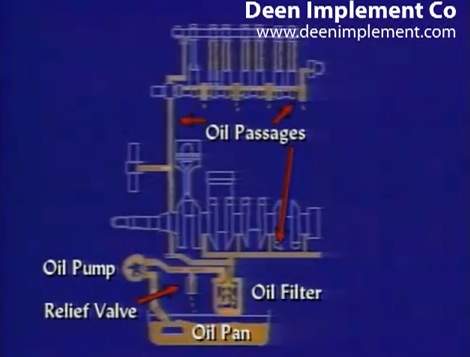
Purchasers of new Kubota equipment were at one point provided a special DVD that contained an engine maintenance overview hosted by Robert DeNiroDoc Kubota which is Kubota’s official version of our own Service Department Vic. Credit goes to Deen Implement, a Kubota dealer in Texas, for posting the 4 part series that covers lubrication, air intake, cooling and fuel systems.
It is hard to recall the last time we saw a diesel mechanic in a nicely pressed button up shirt and tie under his overalls, but try to look past that as you watch the videos.
Food for Thought
The engine in your Kubota is designed to operate under load, shock cycle, temperature, dust, debris and climate extremes. Think about the engine having to power the tractor and loader as you dig into a pile or summer mowing all the way through to winter snow blowing.
Despite these challenges many of Kubota’s engines operate for thousands and thousands of hours (30+ years). Their engines are some of the most compact, powerful for their size and fuel efficient diesels made. Their engine division is something they are most proud of. We have an entire article that details their engine factory in Japan which is also worth a look.
Introduction
Meet Doc Kubota and also see a very rare shot of an L200 around the 1 minute mark. The L200 was Kubota’s first state-side compact tractor which appeared on the scene in 1972 and really was the genesis for the compact tractor market – something that Kubota continues to dominate today.
Part 1: Lubrication System
How to select the right oil, oil as a heat sink and when to change the oil and filter after purchasing new equipment (50 hours). We also get a good shot of what oil looks like after 1000 hours and it is not pretty.
Part 2: Air Intake System
Air filter overview, safety filters and expected service intervals. Something else interesting here is that Kubota recommends not replacing the filter too often (ie. before the service interval). They claim that the filter performs its best when it is no longer “fresh”. If air filters are replaced at 1/4 of the service interval the risk of engine damage is 300% higher! Follow the guidelines in your operator’s manual carefully.
Part 3: Cooling System
Antifreeze selection, mixing and radiator maintenance. Lots of good tips here: 1) a 50/50 mix of water and antifreeze is better at heat transfer than antifreeze alone, 2) distilled water prevents scale buildup that hurts cooling performance and 3) summertime operation does not require flushing the mix and replacing with water – you get better warm weather cooling performance by sticking with the 50/50 antifreeze-water mix.
Part 4: Fuel System
Fuel types for various climates, including cold weather, fuel line bleeding, filter maintenance and how to prevent water from getting into the fuel. Right around the 3m11s mark we get a nice shot of filters which have been written on as to when they were replaced last. This is something we do in the shop too and recommend this as a best practice.
The later half of the video covers some engine diagnostics based on the color and type of the exhaust smoke.
Conclusion
We will admit – Doc’s growing on us a bit and even though some parts of the videos sound like common sense there are some good tips buried in there.
The bottom line is that you have to take the effort and (small) expense to understand your equipment, its engine and maintain it. Part of that effort is arming yourself with all knowledge available – articles, forums, videos, service manuals, etc. Luckily, if you are reading this on OrangeTractorTalks you are already at one of the best places to start doing exactly that!
]]>Mr. Khttp://www.orangetractortalks.com<![CDATA[Kubota Model Variants Explained]]>http://www.orangetractortalks.com/?p=28512019-08-10T17:34:44Z2011-02-09T02:00:55Z
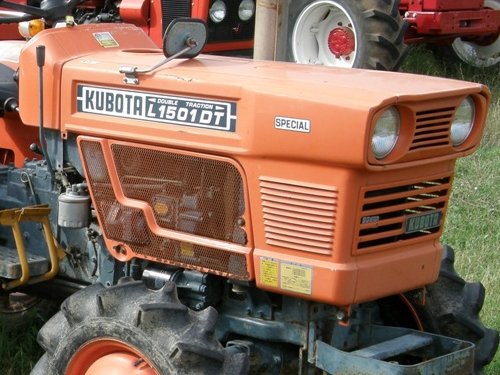
What do the letters DT mean after the L1501? Well in this case it is written right alongside - Double Traction - which is Kubota's way of saying this is a 4WD tractor.
Ever wonder what those letters mean at the end of most Kubota model designations? For example, what is the difference between a L175F and a L175DT? What type of agricultural setting might you find a M8540DTNHC in use?
Lettering to identify variants within each line is littered everywhere – Kubota’s brochures, service, parts and operators manuals, online discussions, reviews, auctions, advertisements and so on. Knowing how Kubota identifies variants within a model range is very helpful when it comes time to make buying decisions or afterward, when performing regular service and maintenance.
It is very common to find the variant lettering appended to the main model number right on the hood for older Kubota equipment (1970s-1990s). In recent years Kubota has really toned down how many letters they physically apply to the hood although reference literature and brochures still make use of lettering.
Some Tips
Some general guidelines that hold in most cases:
C refers to cab model
CS refers to creep speed
D or DT refer to four wheel drive
E or F refer to two wheel drive
HST refers to hydrostatic transmission
GST refers to glide shift transmission
N refers to narrow tread model (think orchards or vineyards)
So our M8540DTNHC from above would be a M Series 8540 four wheel drive, narrow and high clearance tractor. We would likely find this in use on a vineyard (a very big one for that kind of horsepower).
Detailed Lists
What follows are more detailed lists for various model designations that Kubota has usedin the past and currently offers on their new models. This is not a complete list but is a very good start. Jump to a section or scroll down. B Series BX Series L Series M Series
Swing Sift transmission, dual speed, creep speed, cab model with cold weather package
SU-F
special utility, two wheel drive, fold-able ROPS
SU-R
special utility, two wheel drive, rigid ROPS
SU-TF
special utility, two wheel drive, turf special
SUD-F
special utility, four wheel drive, fold-able ROPS
SUD-R
special utility, four wheel drive, rigid ROPS
SUDT
special utility, four wheel drive
SUMDT
special utility, mechanical shuttle, four wheel drive
W
wide row
]]>Mr. Khttp://www.orangetractortalks.com<![CDATA[An Overview of Kubota’s Grand L40 Series]]>http://www.orangetractortalks.com/?p=25612019-08-10T17:34:44Z2010-10-04T08:00:33Z
Marshall Klinefelter's L5740.
Today we take a look at Kubota’s popular Grand L40 Series lineup and also share with you some snapshots sent in from OrangeTractorTalks readers. We want folks to know that we appreciate not just Kubota’s smaller compact tractors but also their larger offerings as well. In recent years Kubota has put serious effort into expanding their larger horsepower lineup by introducing models such as the MX100 or MX135. The Grand L40s contain no 100+ horsepower monsters but they certainly hold their own.
Series Overview
Introduced in early 2007, the Grand L40 Series is crowned by the L5740. Others in the family include the L3240, L3540, L3940, L4240, L4740, L5040 and L5240 ranging from 32 to 57 horsepower for the L5740.
The next size down from the Grand L40s are the standard L Series models such as the L2800, L3400, L3700 or L4400. These models tend to be simpler to operate, have no cab option, and have fewer fancy features when compared to a Grand L40 – and their pricing reflects that. They are still very capable Kubotas and represent very good tractor value.
If 57 horsepower is not enough for you the next stop is an M Series, most likely an M40 Series where power starts at 52 horsepower and stops just shy of the magic 100 at 95 horsepower for the M9540.
Two “brother” tractors to the Grand L40s are the specialty TLB models, the L39 and the larger L45 which come equipped with a loader and backhoe as standard equipment. These two TLBs share a lot of the features and technology from the Grand L40s that we will get to in a moment.
Engine
All Grand L40s use Kubota’s latest interim Tier IV compliant 4 cylinder diesel engines manufactured in their Tsukuba, Japan engine plant. The Grand L40s powerplants belong to the 03 Engine Series which uses Kubota’s own TVCS (Three Vortex Combustion System) combustion chamber design. TVCS which means lower operating noise, shorter plug preheat times and most importantly, compliance with the United State’s EPA diesel engine emission requirements.
Five engine models cover the eight model lineup with natural aspiration giving way to turbochargers for the L50/52/5740s which share the V2403. Maximum operating spec varies between 2700 and 2800RPM.
Mechanical and PTO
4WD, hydrostatic power steering, halogen lights, rear differential lock, wet disc brakes and parking brake are standard across the line except for the entry level L3240 which comes with 2WD. Mid PTOs are optional if you are interested in running a snow blower or perhaps the 72″ RC72-38 mid-mount mower. A live independent PTO clutch permits individual control over engaging the mid and rear PTOs.
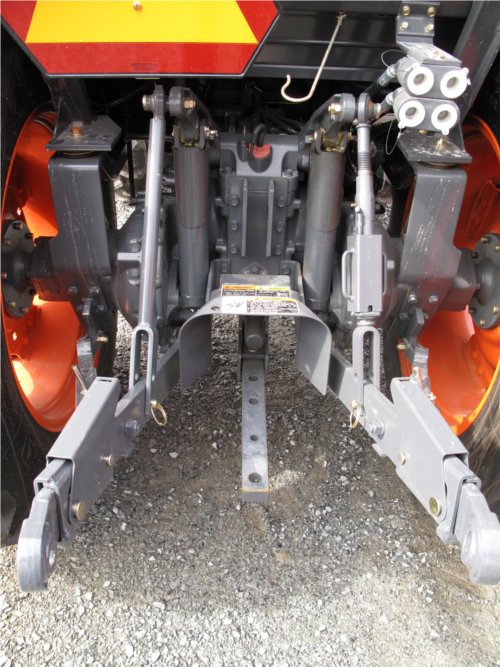
The business end of a L5740.
PTO output ranges from 25 to 50 horsepower – plenty enough to drive most implements around the acreage or tree farm. Telescoping lower link arms are standard equipment and 3-point lift cylinders significantly boost lift capacity of the hitch.
Transmissions
Three transmission choices are available. The standard 8 Forward/8 Reverse FST (fully synchronized transmission), with GST or 3-speed HST transmissions optional on entry/mid level models and standard equipment on the L50/52/5740s. The entire Grand 40 lineup has access to a HST transmission if you so desire.
HST Plus
New for the Grand L40s is what Kubota calls HST Plus. The usual HST pump supplies oil to a new 2-stage (high/low) drive motor which is electronically controlled depending on the operator’s settings, the engine RPM, the HST pedal position and the load sensors. All of these features make using the HST a bit more user friendly in addition to helping overcome some of the most common problems of stalling, jerking or bogging down when an implement “digs in”.
Messick’s has an excellent overview of HST Plus along with videos which is required reading if you are considering adding a Grand L40 to your collection.
The basics features of HST Plus are summarized as:
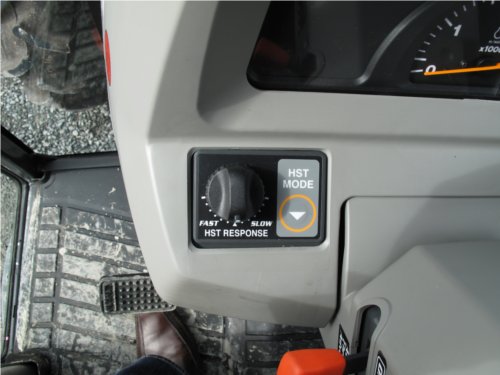
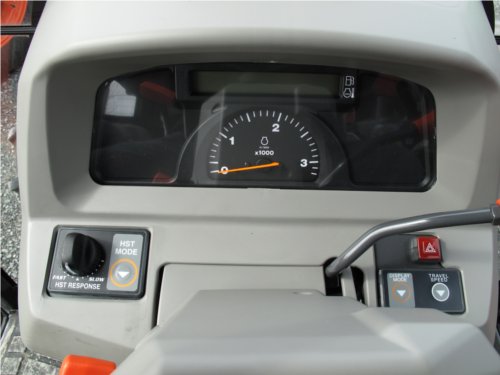
HST Response Control – the HST pump is modulated according to 1 of 13 fast/slow settings. The result is smoothing out starts and stops when set to slow or increased responsiveness on HST pedal directional changes when set to fast. Inexperienced or new operators have a tendency to be quick on the HST pedal so a slower setting here helps build confidence.
HST Response Control provides 13 settings of HST pedal response. Slow dampens starts/stops whereas fast increases responsiveness of pedal directional changes.
Stall Guard – a marketing name for load sensing. Power to the wheels is constantly monitored to prevent or reduce the likelihood of engine stalling or HST bypass when moving over terrain with heavy loads or digging into a pile. These two videos below demonstrate what it looks like to dig into a pile with Stall Guard disabled versus enabled.
Hydro Dual Speed (H-DS) – the 2 stage drive motor is switched between high/low settings either manually by the operator or automatically by the computer. In manual mode, if the operator knows the engine will become bogged down, they can use a lever on the steering column to switch the drive motor from high to low settings – effectively trading off 40% travel speed for a 60% increase in torque. Automatic mode leaves the switching between high/low (speed vs. torque) up to the electronics – automatic up/down shifts will occur depending on the situation.
Auto Throttle Advance – links engine and travel speeds, similar to the experience of driving a vehicle equipped with an automatic transmission. It does this by letting the HST pedal dictate engine speed and the electronics match up the HST pump and 2 stage drive motor.
HST Plus can also be found on Kubota’s L45 and M59 TLBs.
Grand Cab
Grand Cab is Kubota’s trademark for their very well appointed cabs that sit atop all of this heavy machinery. Some of Kubota’s literature describes these glass bubbles as “luxury” enclosures which is hard to disagree with when you hear what they can pack into it:
wide cloth reclining seat with arm-rests, springs and seat belt
wide rubber-cushion foot platform
air conditioning and heater with 7 adjustable vents and 2 zone heating – one zone for the operator’s body and another for his/her feet
front and rear work lights
CD/cassette/radio
cup holder
12V power
various storage pouches
interior dome light
front wiper
front, corner and rear window defoggers
rear corner windows and rear window that open to allow air to circulate
tinted glass
side mirrors
tilt steering wheel
computerized information panel (IntelliPanel)
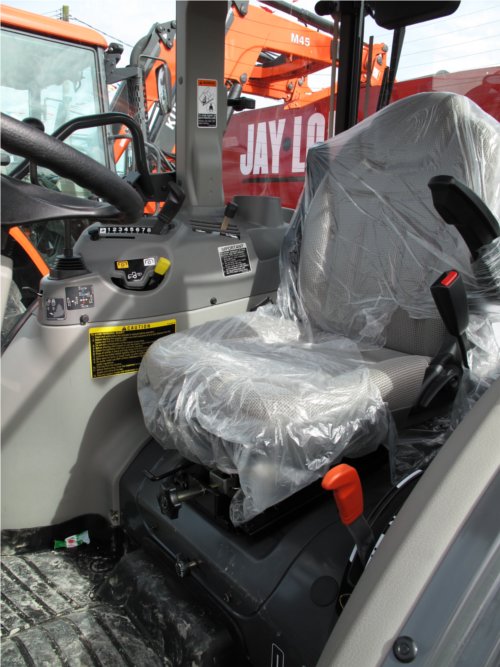
Cab shot from the left-side door.
Sitting in the cab of the L5740 you cannot help but want to touch all of the controls, knobs and begin making various adjustments and tweaks. Unless you go cab-less, the head room is unmatched, and despite the goodies crammed into the cab you never feel crowded. A person could get real comfortable in this cab whilst blading a few feet of snow out of the driveway.
IntelliPanel dashboard with HST Response controls on left.
Pricing
As of September 2010, prices range from $21,000CAD for the entry 2WD L3240 to $43,000+ for the L5740 with the Grand Cab. The cab option itself is a $10,000 touch and once you add on helpful extras like the LA854 front end loader or BH92 backhoe, a fully appointed L5740 would cost well into the $50-55,000+ mark.
One Reader’s Buying Decision
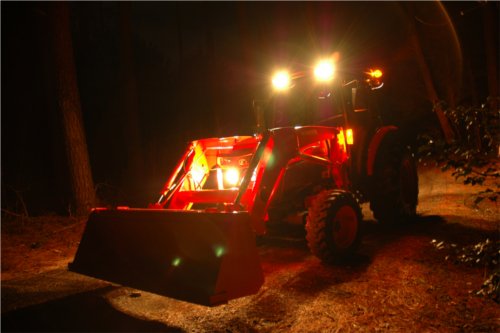
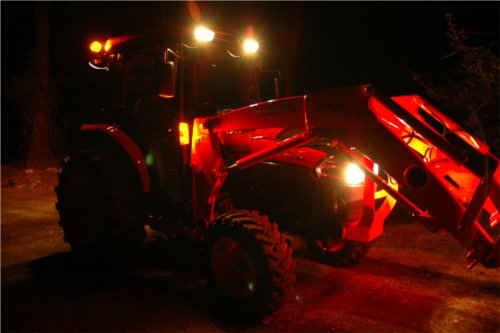
Now that we know approximately what a Grand L40 is and what you get for your money, why not find out more as to what goes into a buying decision for such a model. OrangeTractorTalks reader Marshall Klinefelter sent us a few night shots of his L5740 at our request and also gave us some insight into his purchasing decision.
The heavy bucket with reinforced corners means Marshall can pop stumps and with a box blade on the back, he can regrade the farm lane with ease.
Marshall uses his equipment to service his 26 acre tree farm and also to clear the lane way for himself and his neighbors during the winter. In addition to the L5740 he also had his eye on the John Deere 4720, a 66 horsepower, 4 cylinder turbocharged diesel with similar hydrostatic transmission features as the Kubota (HST Plus vs. John Deere’s eThrottle and MotionMatch). Understandably he was torn and his friends were all either entirely from the orange or green camps.
Marshall upgraded his L5740 with rear wheel weights, rear lights and quick disconnect front bucket.
From my discussion with Marshall there were three things that clinched the Kubota for him:
A recommendation from a fellow respected contractor (who bleeds JD green) that John Deere is king of large equipment but the compact tractor experts are more of the orange variety.
Feeling at home with the online information, schematics, and easy parts ordering offered by the biggest Kubota dealership in the United States – Messick’s.
HST Plus with stall protection.
Marshall got back to me a few weeks later and added that part of his homework on the JD 4720 was running the tractor and engine serial numbers. The Deere had undergone a complete disassembly and reassembly along with a new hydro unit in only 500 hours of operation. Good call on the Kubota I would say!
Conclusion
The Grand L40 Series are Kubota’s premium L Series offering. Even entry or mid level models like the L3540 or L3940 are well appointed with standard features such as 4WD, differential lock, power steering and a wide seat and operator deck. If you want, the L5740 lets you pop stumps from the comfort of your air conditioned cab. Owners that opt for the HST transmission are receiving one of the most advanced HST solutions offered on the market today for a tractor of that size.
The entire Series is about customization. There are 5 engine choices, 3 transmission choices, 3 loader choices, 2 backhoe choices, multitudes of tire options and then after all of that you can ad a cab on top.
Kubota’s tag line for this Series? Life is Grand. What else is there to say?
Mr. K
]]>Mr. Khttp://www.orangetractortalks.com<![CDATA[5 Videos of Kubotas that Pull Their Weight]]>http://www.orangetractortalks.com/?p=21402019-08-10T17:34:44Z2010-01-29T23:58:34Z
It is time for another installment of KubotaTube, where we scour YouTube to surface some interesting videos featuring our favorite orange tractor in action. Instructional videos are handy but sometimes its more fun to watch others do the heavy lifting, or pulling, in minus 30 degree weather. Without further delay…
2 Engines, 8 Tires and 5 Gallons of Diesel Fuel
I like this video because it demonstrates the can do spirit, even if it looks a little out of control at times. These two gents managed to chain together what looks like an L245 and L225 to generate enough pony power to get that bottom plow moving. They plowed 2 acres like this.
Orange and Yellow Team Up to Save the Bacon
Skip ahead to the 1 minute mark in this video to watch a Caterpillar backhoe team up with our hero to have a semi truck with a load of hogs stuck in a snow ditch. Family entertainment folks.
Not a Kubota – But it is Orange…
And there’s a horse in this one so we will let it in! Continuing the theme of ropes strung between pieces of heavy equipment moving somewhat dangerously – we have a 4WD Zetor pulling a truck up a muddy embankment – all of which is pulled by a single horse at the top.
Same road, but different truck this time. We also get a glimpse of what not to do behind a muddy heavy piece of moving equipment.
Man and His L3400 Knock a House Down
Demolition and a Kubota L Series. What else does a man need really? Jump ahead to the 0:40 mark to watch the carnage.
Next Best Thing to a Ski Hill
Believe it or not, this is only the second video of a Kubota gray market B1600DT pulling a skier I have seen.
]]>Mr. Khttp://www.orangetractortalks.com<![CDATA[News: Classifieds 2.0]]>http://www.orangetractortalks.com/?p=20992019-08-10T17:35:02Z2010-01-26T06:37:05ZOver the last 18 months the site has grown a lot. We have outstripped the simple classifieds system put together on a weekend more than a year ago… The existing system does not allow anyone to edit or update their ad after the fact, add pictures, take down their ad, answer questions or anything fun like that. It served us well but it was also a pain in the butt to use.
Instead of reinventing the wheel creating a classifieds system, we have a new section on the forums: Buy, Sell & Trade!
Cool! How can I post an ad?
You will need to register on the forums in order to post your ad and any pictures. Registering on the forums also comes in handy when you have helpful advice to give or need it from someone else. Bonus.
What sorts of things should I include in my ad?
Take a look here for some tips. There is no strict rules regarding the formatting of the ads – but – certain things can make your ad easier to find.
What happens to the existing ads on the old system?
They are no longer accessible. If you want your ad up you will have to post it again – sorry about that!
Mr. K
]]>Mr. Khttp://www.orangetractortalks.com<![CDATA[Poll: What is your Kubota Missing?]]>http://www.orangetractortalks.com/?p=20092019-08-10T17:35:02Z2009-11-08T23:39:06Z
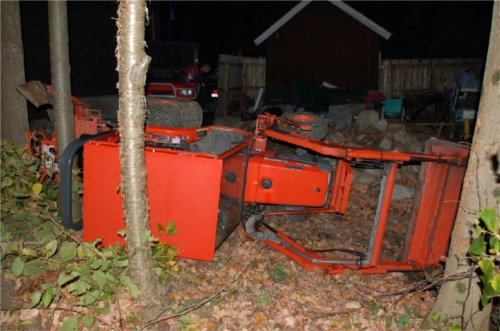
We know at least one person who will be picking 'I wish my Kubota was not tipped over on its side in the woods'... special thanks to Jim Lillie for being a good sport and posting this image in our gallery.
Around here, we know and love our orange tractors, but, that does not mean that there is not room for improvement.
Our latest poll – what one thing you wish your Kubota had but does not already. Maybe you like the finer things in life like a cup holder – would certainly come in handy while you are clearing the driveway. Maybe you bought a 2WD model and are now kicking yourself for it. Or perhaps the simple things appeal to you – just more raw power. After all, there are a lot of tree stumps to remove and so little time… Choose wisely, you only get to pick one!
PS. In case you want to read the back story of how that Kubota came to be on its side, check out Jim’s account here.
[poll id=”6″]
]]>2Mr. Khttp://www.orangetractortalks.com<![CDATA[Poll Results: Would You Own a Gray Market Kubota?]]>http://www.orangetractortalks.com/?p=19412019-08-10T17:35:02Z2009-09-07T01:44:33Z
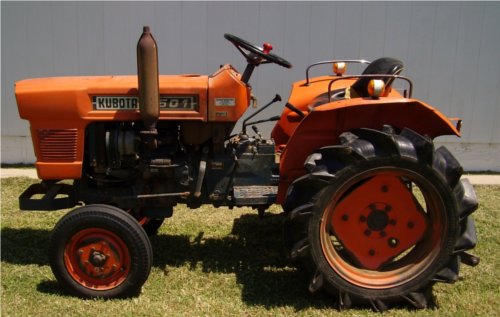
A classic example of a gray market Kubota - the L1501.
A little while back we posted a poll attempting to gauge how gray market Kubotas sit with readers of OrangeTractorTalks. We wanted to know what people thought of the gray market equipment that our friends at Kubota corporate have warned about. Would anyone want to actually own one of these?
Gray market tractors, specifically Kubota grays, have had an interesting history involving leaving Japan in large volumes and eventually arriving at their second homes all over the world. Emails and visitors from all around the world arrive asking questions about their gray market equipment. Folks from Greek islands, South Africa, Australia, France, Germany, Spain, Iran, Ireland and closer to home too – Camrose Alberta or Moosejaw Saskatchewan.
Results
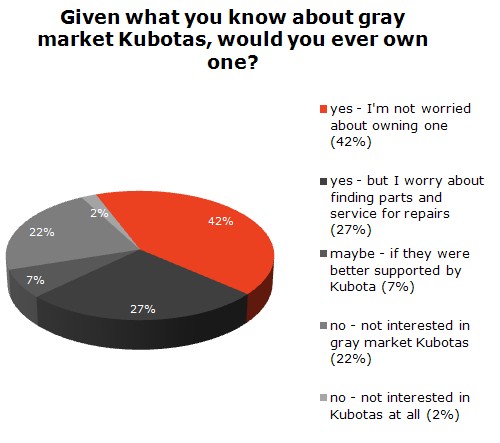
After 300 votes, almost 70% of folks feel they have no problem owning a gray market Kubota. A full 42% of those voting indicated they had no worries when it came to the special type of ownership that comes along with owning a gray market tractor. 7% were still on the fence – not sure if the hassle and lack of support from their dealership is worth it.
Some might say that the poll is skewed a bit. After all, this is an orange tractor enthusiast site, so any responses to the poll would likely reflect positive feedback for ownership of any orange units, even if they are labeled as gray market. I am sure owners of gray market tractors responded to the poll. If they have had negative experiences with their equipment I think we would have seen higher figures for the choices “no – not interested”.
Conclusion
Despite the rumors and supposed horror-stories, a lot of people can see value in those gray market Kubotas – enough so that 7 out of 10 would own one. It is true that your local Kubota dealer might not be all that helpful when it comes to the great deal you found in your local agri-trader that you now want to fix up. Fear not – there are places to find parts and helpful advice when it comes to that gray Kubota (hint: you are at the site now).
Stay tuned for another poll to come out in the next day or two!